Google Analytics

Monday, June 16, 2014

Fried Egg Porn, On A Horse

One of my favorite treats as a kid was so simple it is almost laughable. The dish that sent an electric charge up and down my spine and tickled my tummy was simply white rice topped with a fried egg.


This is a simple pleasure that works to this day. Fluffy, buttery rice topped with an egg, with slightly crispy edges and a runny yolk that gives the resulting mixture a heavenly, savory creaminess (rich and velvety). In terms of seasoning, a pinch of salt and pepper is sufficient.

The dish, called huevos montao’ a caballo (roughly eggs riding a horse, but mostly it means riding saddle). All my grandmother had to say was a caballo and I’d fly to the table!


I wasn’t a particularly finicky eater – mostly because there was no such thing in her house, you ate what she gave you or you ate it once it got cold but you did not dictate the menu in her house, especially if you were under three feet tall.

She was concerned that I wouldn’t eat the eggs because she was feeding me eggs every day. I had iron deficiency anemia and this is what the doctor ordered. So I had eggs at least twice a day for quite some time. I was not consistent in my love of the soft-boiled egg – sometimes pushing them and her away and rejecting the very idea (but I suspect this owed more to her heavy-handedness with the salt shaker).

I never, ever rejected anything a caballo.

Of course, I always assumed my grandmother invented a caballo, but I know better as an adult. The trend has returned with a vengeance and there is not a week that goes by that I do not find some food blog with some comfort food with a fried egg on top of it – from veggies to pasta to meats and fish to pastas and grains. The hamburger with the fried egg I saw a couple of weeks ago left me breathless and a little nostalgic.

It is not a new thing, no matter how they try to sell it to you and it is not exclusive to one culture or another:

Brazilians do it over steak.
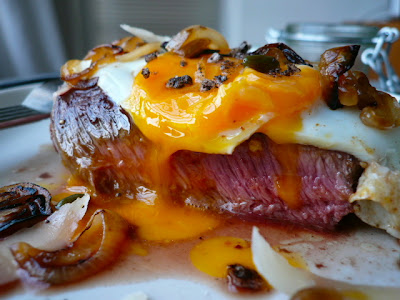

The French adorn a ham and cheese with a fried egg and call it a Croque Madame.


Germans top schnitzel with sunny side up eggs.


Indonesians make nasi goreng, fried egg over stir-fried rice.


Koreans serve it over kimchi fried rice or bokkeumba.


There is a Moroccan delicacy called kefta tagine that consists of lamb meatballs and a fried egg.
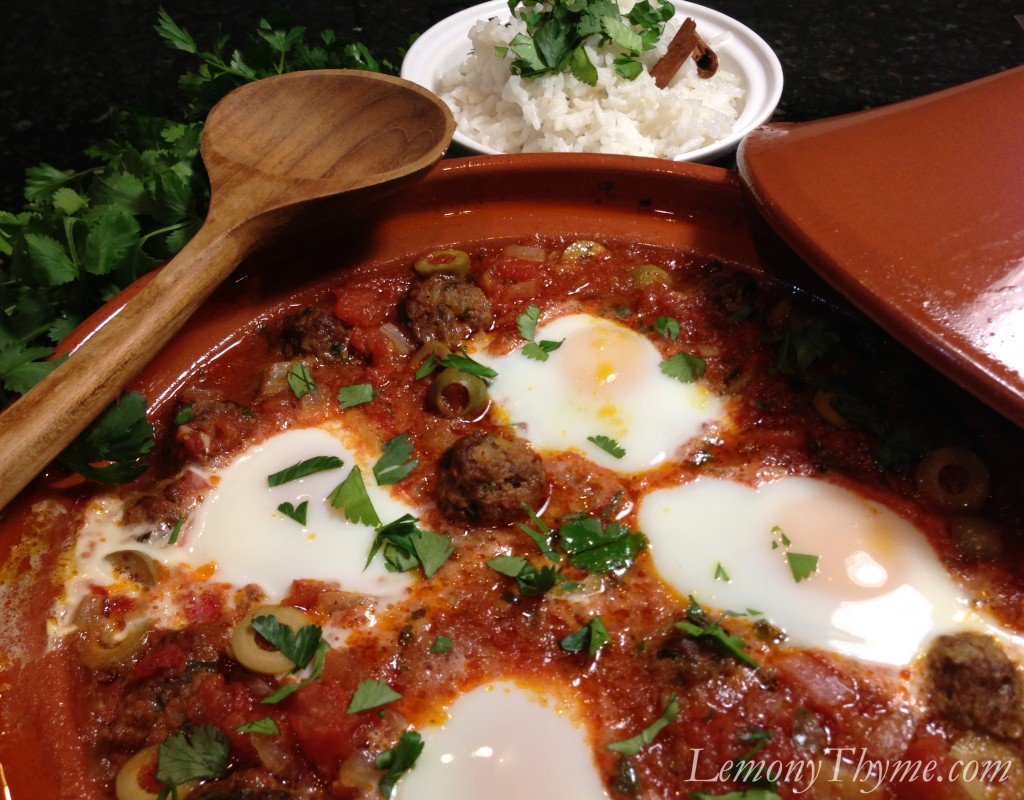

Spaniards serve over rice and tomato sauce. (And Mami did a variation of rice, stewed cod, and then fried egg.)


The Taiwanese make cong you ban mian, flash fried scallions over noodles topped sunny side up.


I’ve seen them over noodles and in pizza! On top of some hash. Over beans in a tortilla, and on a leafy salad!! In a cup made from bacon. Over spinach or asparagus. Over French fries!!! 

And for you fans of “Moonstruck”, there’s the ever lovely eggs-in-a-hole that Italian Americans make to lure us into their crazy breakfasts!


Doesn’t matter how you fry your egg, it’s pure comfort, baby! Comfort and (food) porn.


UPDATE: If you enjoyed this article and the recipes in it, you can link to its companion piece, a dedicated Pinterest board you can refer to any time.


Monday, June 2, 2014

Homemade Ice Pops

When I was a little girl, any time one of our neighbors or my godmother and her husband went to the country, they'd bring back all the fresh produce they could pack in their cars. Every conceivable fruit on the island of Puerto Rico made it to my lips in one form or another.

My grandmother made jams, candied the fruit, she juiced it. If she did not know of an alternative way to serve a fruit, she asked (that was her research), she kept recipes for later experimentation. Her goal was to have me get a healthy serving of fruit but also not to get bored with it.

Of all the things she did with fruit, my favorite was the “icies”. She'd take fruit pulp, usually processed in the blender, mixed with juice and milk or cream, and frozen in ice trays. Depending on the fruit's water content, the texture varied, but it was always delicious and a fun summer treat.


Of course, I grew up in Puerto Rico, so by “summer treat” I mean an every day treat.

She always wanted me to place each cube on a small plate, and use a spoon. At the very least she preferred that I use napkins. But I was a kid and the fun thing to do was eat it with my fingers, let the juices run down my hand, and lick it slowly after I devoured each cube.

That poor woman! She was horrified people would witness this savagery and think she did
not know how to properly raise children. At least that's what she'd say after she'd hit me upside the head and tell me to eat like a “civilized human being.”

Of course, she did not know about ice pop molds and their sexy wooden sticks—mostly because I doubt they were available anywhere near us. Today, ice pop molds can be bought at most supermarkets, drug stores, and online at a cost of $5-15. The molds are reusable.


(I understand the concept of broke and if you don't have it right now, small beverage cups work just as well. Cover with foil and freeze to a slushy consistency about 30 minutes before you insert sticks through the foil and into the pop.)


It is fairly easy to make your own, keeping the ingredients fresh and local – if that is your wish. Generally, you can pour the mixture into your mold and insert sticks. Most pops freeze in 4-6 hours, so you can make them overnight and have them ready for the next day. Run some hot water over molds to free up the goodies inside and enjoy!

Papaya Pops
Puree cups of papaya in food processor. Mix in ¾ cup water or seltzer for a tingly finish, 3 tablespoons of sugar, 2 tablespoons of honey, the juice of one lime, and ¼ teaspoon of salt.

Berry Yogurt Pops
Puree 2 cups of fresh or frozen mixed berries and sliced bananas, 2 cups of plain or vanilla yogurt, ¼ sugar (or substitute with honey).

Tropical Pops
Blend 1 cup of coconut water, 3 ripe bananas until it makes a milky mixture. Add sliced or diced mango, cherries, kiwis and a little honey to bind the sweetness (you can add a little lemon or orange juice).

Strawberry Pops
Blend until smooth 2 cups strawberries, ¼ cup apple juice, the juice of ½ a lemon, a pinch of salt, and 2 tablespoons of honey.

Strawberry Cream Pops
Blend until smooth 2 cups of cut up strawberries, ½ cup sour cream (or yogurt) 2-3 tablespoons of sugar (or honey), 2 tablespoons of lemon juice.

Virgin Colada Pops
Blend 1 can of coconut milk, ½ cup fresh chopped pineapple (or peaches), ¼ cup sugar, 1 cup pineapple juice, ½ teaspoon coconut extract.

You can make ice pops out of your favorite smoothies too. There are plenty of recipes online, but this will give you some idea of the basic ingredients you can use to get started. You can make adult pops with a dab of alcohol – just don't use a lot because most alcohol freezes at extreme temperatures and will affect the texture of your pops.

You know your tolerance for sweet and sour, and you'll have to adjust the “seasoning” to your taste buds. In lieu of water, you can use tea for slightly different flavorings. You can add espresso to half and half, and sweetened cocoa for a more robust (and caffeinated) treat. 

Have fun! Stay cool. Enjoy "summer" any time you wish, because it is as much a calendar thing as it is a state of mind.

Tuesday, May 20, 2014

Redefining Comfort and Happiness

For the foreseeable future I am working in Sunset Park, below historic Green-Wood Cemetery:


I love that I am literally minutes away from my house. In fact, if all public transportation breaks down into complete chaos or total shutdown, I can walk home and be there in about half an hour.

As I vet the job in terms of tasks required, I pre-vetted the location for important things, like food available in the immediate vicinity of the office. This is what I reported to my friends:
- One block away south: pizzeria.
- One block away north: pizzeria (this is Brooklyn!), Latino diner, coffee shop and grill, another Latino coffee shop and grill, (there's also a White Castle, but no!), a deli and one Chinese restaurant.
- Two blocks north: Subway, another Chinese restaurant, Mexican restaurant, two more delis, the Tiki bar, and a cemetery ('cause zombies gotta eat too).

I'm certain that if I expand my search upwards to 36th Street, the transportation hub for the area, there will be a few more pizzerias, several taquerias, and more Chinese take-out restaurants. 

We have a lot more food alternatives since Ralph Kramden worked in the 'hood. In fact, now that the bus depot is named after Jackie Gleason, it occurs to me that Ralph Krandem was a genius ahead of his time (remember the time he wanted money to start a food truck? Those things are cash cows!!!).


There is a variety of mom-and-pop shops, bodegas (urban corner stores that combine candy story and tiny supermarket in one weird tiny package that includes lots of canned foods and neighborhood gossip), pizzerias, and some fast food alternatives. A few blocks below Chinatown, we do have almost as many Chinese take-out places as any city.

Because there is a growing Central American population, the area is also known for a lot of tiny taquerias and a string of various Mexican restaurants specializing in different local cuisines. The established Latino population—we now take a moment to consider native son Jimmy Smits...


...and we're back, heaving bosom and breathless. As I was saying, the established Latino population tends to be Puerto Rican and Dominican, which gives us such gems as mangú with cheese and eggs for breakfast (a dish of mashed plantains slightly different from the mofongo introduced last time):


One of the American diners, Big John, offers fries with cheddar and bacon (oh yes!):

It is not as varied as my old gig at 16th Street and Irving Place where we had a delivery area that included the Village, Chelsea, and the Union Square areas (including the French bakery that made chicken pot pies on Wednesday only between Fall into Spring).

On the other hand, we have plenty of comfort food (and there are healthy alternatives too, just not as much fun to talk about). The biggest comfort and the greatest selling point is being so close to our own kitchen and my favorite cook. 


Quality time with Mom trumps a lot of fringe benefits because it is the best benefit of all: Pure sweetness with no calories, plus it's good for you.

One runs the risk of becoming awfully provincial with the temptation never to leave Brooklyn because I have all I need here. 


Bridge to bridge, worst things could happen to a person, I say! 


You have to be dynamic while defining the parameters for happiness and comfort as they meet the reality you inhabit. Brooklyn and Mom are exactly what I need. That combo is pure soul food!

Monday, May 5, 2014

Mofongo in So Many Ways

Image: “Mofongo en el Pilón” by Yolanda Rodriguez, 
to view and buy her artwork, visit her Artist's Page at 


A few weeks ago, I wrote about plantains and shared ways to shop, prepare and cook them. A very versatile fruit! I even mentioned the plantain's stain as the metaphysical soul of the Puerto Rican, the subject of poetry no less.

We were discussing comfort foods (there was mention of chocolate, cheese, mashed potatoes, and bacon – of course). To Puerto Ricans, whether island-bound, in the mainland or spread across the globe, the mere mention of mofongo is cause for sighs, salivating, and all sorts of warm fuzzies. Dominicans have a similar dish they call mangú and Cubans have a boiled version they call fufu.

Along with asopao (soupy rice), arroz con gandules (rice with pigeon peas), and lechón asado (roast pork), mofongo is one of the island's national dishes.

Clearly influenced by its African ancestry, mofongo is a dish composed of fried green plantains. Traditionally, the fried slices are salted, placed in a pilón (a marinaded, wooden mortar) and mashed down.


Some add butter at this stage, I prefer a good virgin olive oil, and garlic. The mofongo is then served with a garlic sauce and generally “stuffed” with chicharrón (crackling) or roast pork (new fusion versions also include shrimp, lobster, and other fried meats, as well as vegetables).


Then, there are several ways to top it, from the aforementioned ajilimójili (garlic sauce) – from broth, pureed seafood, and even spicy black beans.

There is a whole new entity that has entered the arena: trifongo. This culinary sexy beast includes green plantains, ripe plantains, and yucca (cassava).


Trifongo
2 green plantains
1 ripe plantain (yellow)
1 small yucca

oil for browning
salt


Pick yellow, not blackened, ripe plantains or the dish will come out really sweet (dessert sweet).

Peel yucca and cut in quarters. Parboil 5-10 minutes depending on quantity. You want it softened and you can remove the fibrous filaments in the center. (You can do this step ahead of time and refrigerate the yucca.)

You'll take the skin off as instructed earlier, slice and set aside. Some people place the plantain slices in cold, salted water until ready to start (dry before placing in frying pan).

Heat oil, I use enough to cover the bottom of a cast iron pan up to about 1/8th of an inch (about a quarter cup). Place plantain slices and brown (this takes no more than 3 or 4 minutes per side). Ripe plantains will cook and caramelize faster. Brown separately so that the green retain their savory and the ripe ones retain sweet.

Brown the yucca, also a few minutes each side.

Set aside the cooked ones on paper towel to absorbed extra oil, salt immediately. Place in pilón, mash. Add oil and garlic, or hot sauce, fried meats, to taste. If you do not own a pilón (mortar and pestle), you may use a spoon to smash the plantain and yucca, and a bowl to mix them.


You can serve the monfongo or trifongo in your pilón (that's the traditional way). If you don't want to deal with peeling or cannot find the fresh ingredients, Goya has frozen plantains and yucca. It's convenient, but I cannot vouch for the taste and texture as I have not used these products.


The result is crunchy, creamy, filling, slightly sweet, earthy, sexy, velvety and delicious. If you are not entirely sure you can hack it in your own kitchen, find a restaurant that serves it so you can see it, smell it, taste it, and fall in love with it. Then you can try it. You will not regret it.


Sunday, April 20, 2014

Celebrating Spring

Through the years, Easter dinner meant a variety of things: baked ham, a leg of lamb, roast pork. 

There was always an abundance of meat because it is the end of 40 days and nights of no meat (at least that was the custom a long time ago, when they still said Mass in Latin).

The last few years, Easter at our home meant a variety of delectable tapas. Mostly, it was an excuse not to cook, and it spanned cultural influences from Meso-American to Asian, Mediterranean, Middle Eastern, or whatever stroke our fancy.

This year, because we had a few extra dollars, though not enough for an actual feast, I decided on a relatively simple dish.

Easter dinner: lobster ravioli, sauteed scallops, and pesto sauce.

All products on this plate from Trader Joe's.
Not the most beautiful photo ever taken, I realize, but all I care about it that Mom loved it. At least that much I got right this week. 

Saturday, April 12, 2014

Peru Trending


"Peruvian cuisine" is one of the Top 50 hot trends for 2014, according to the National Restaurant Association. I do not know if they expect specific Peruvian dishes to make it into restaurants at large (a cuy sandwich at McDonald's?) or if we are to expect a sudden increase in Peruvian restaurants.

To be fair, Peru has one of the more varied influences in the Latin American landscape. Most countries in Spanish speaking countries have, at a minimum, Spaniards and slaves (with a predominance of West African countries) to thank for their national dishes.

Peru boasts not only Spanish cuisine and African influences, but it adds Chinese and Japanese cuisines, Italian and German, and the ancient and native cuisine of the Inca (hello, quinoa!).

The holy trinity of Peruvian staples are simple and yet, influential beyond their borders: chili peppers, corn, and potatoes. To that, add the staples of each group that has made a home out of the country and you have the ultimate trend-setter in fusion cuisine.

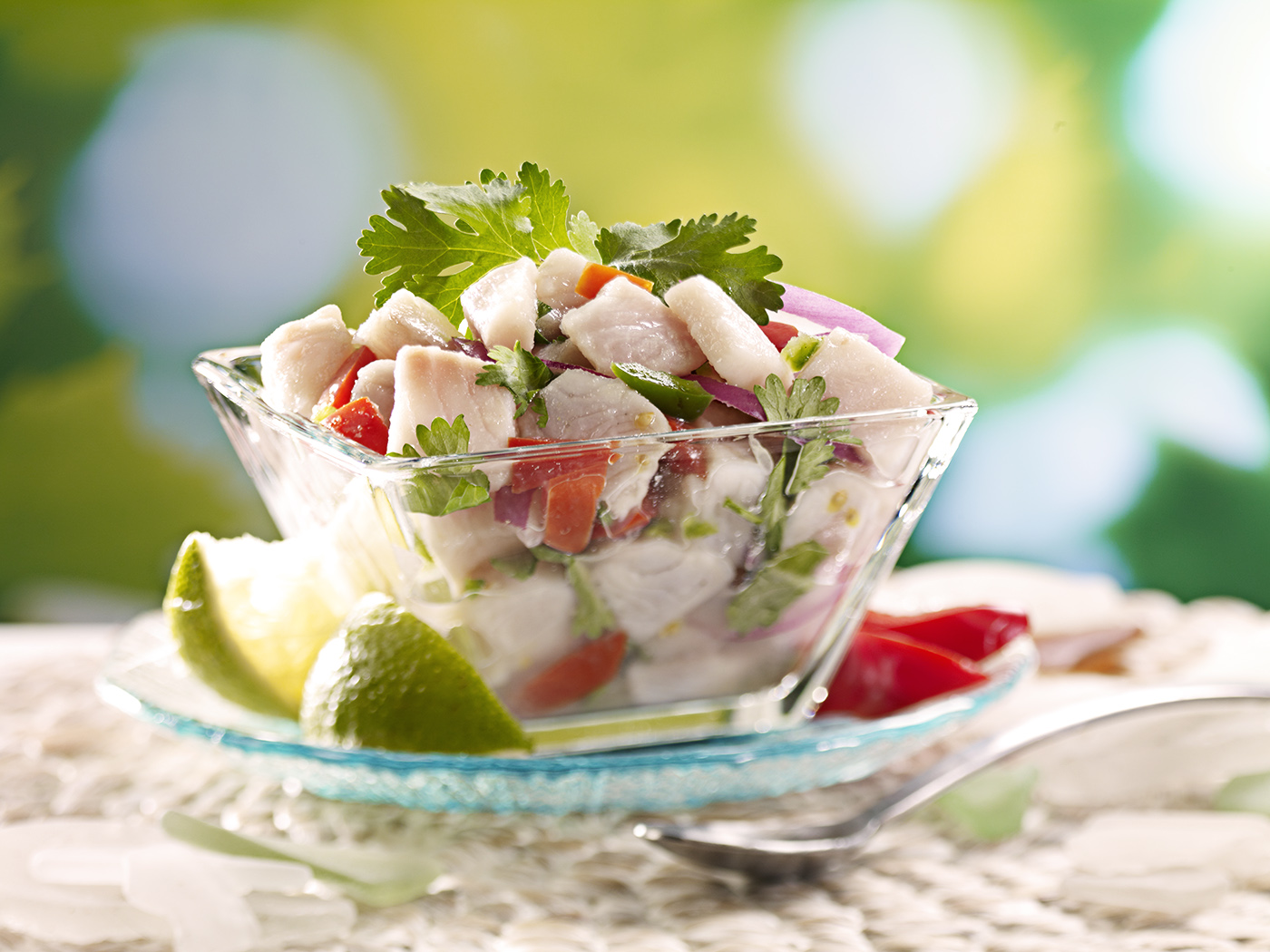
Probably the most widely known Peruvian culinary tradition is a piece of fusion cuisine: ceviche – which combines marinated raw fish (Japanese), with chili peppers (Andean) and red onions marinated in lime (Spaniard). This is a simplified explanation, of course, and it doesn't take into account the complexity of the dish.


For the few unfamiliar with the idea, the lime marinade cooks the fish and gives it a delicate taste. The leftover liquid from the citrus marinade can be ingested as well and said to be a delicacy called leche de tigre (tiger's milk).

The other thing that makes Peru quite special, besides multicultural diversity, is diversity in its geographical landscapes. Peru has mountains (Andes), valleys (including land bordering The Amazon), and a Pacific Ocean-facing coastline.

This means that they grow a great number of indigenous roots and tubers, fruits and vegetables, grains and beans; have an abundance of fish and seafood; and their diet also includes the troika of meat sources (chicken, pork and beef). You can find omnivore, vegan, and pescetarian recipes in their national repertoire of dishes.


There are several fruits, indigenous to the Andes that I grew up with in Puerto Rico, and which are available here at produce stands. I am not certain how widely available these may be across the nation, but if you can find any of these, I highly recommend you try them out.

Guanábana, also known soursop, a somewhat pear-shaped fruit with a green, prickly skin. The flesh (pulp, if you wish) is white and has bean-sized black seeds. It is sour, though not overly so and its flavor is a combination of coconut milk with a citrus base. It may be eaten as is, you can juice it, make it into thick, creamy shakes, ice cream or frozen fruit bars.


Papaya is probably the most popular of their native fruit and comes in yellow and green skins, shaped like over-sized mangoes and sometimes pear shaped. The flesh varies from a salmon color to a light red, and along the center of the fruit a fibrous wall holds the seeds—which are spicy and peppery and edible. The ripen fruit is usually eaten uncooked, although it may be cooked too (and made into jelly). I understand that some people bake papayas. Of course, it also is a staple in fresh fruit salsas.
Mamey, also known as mamee apples, are round and have a dark skin (usually brown). Once you cut them, they have a large seed like an avocado. The flesh is yellow to orange, and can be relatively soft and juicy depending on ripeness, although texture varies. It is naturally sweet, but not overly so. It can be a little bitter, but it is made into jams and jellies, fruit salads, and even fermented into a liqueur.

Both guanábana and papaya nectar and juice can be used in rum-based cocktails and also as a base for meat tenderizers and BBQ sauces, and in curries or chutneys.

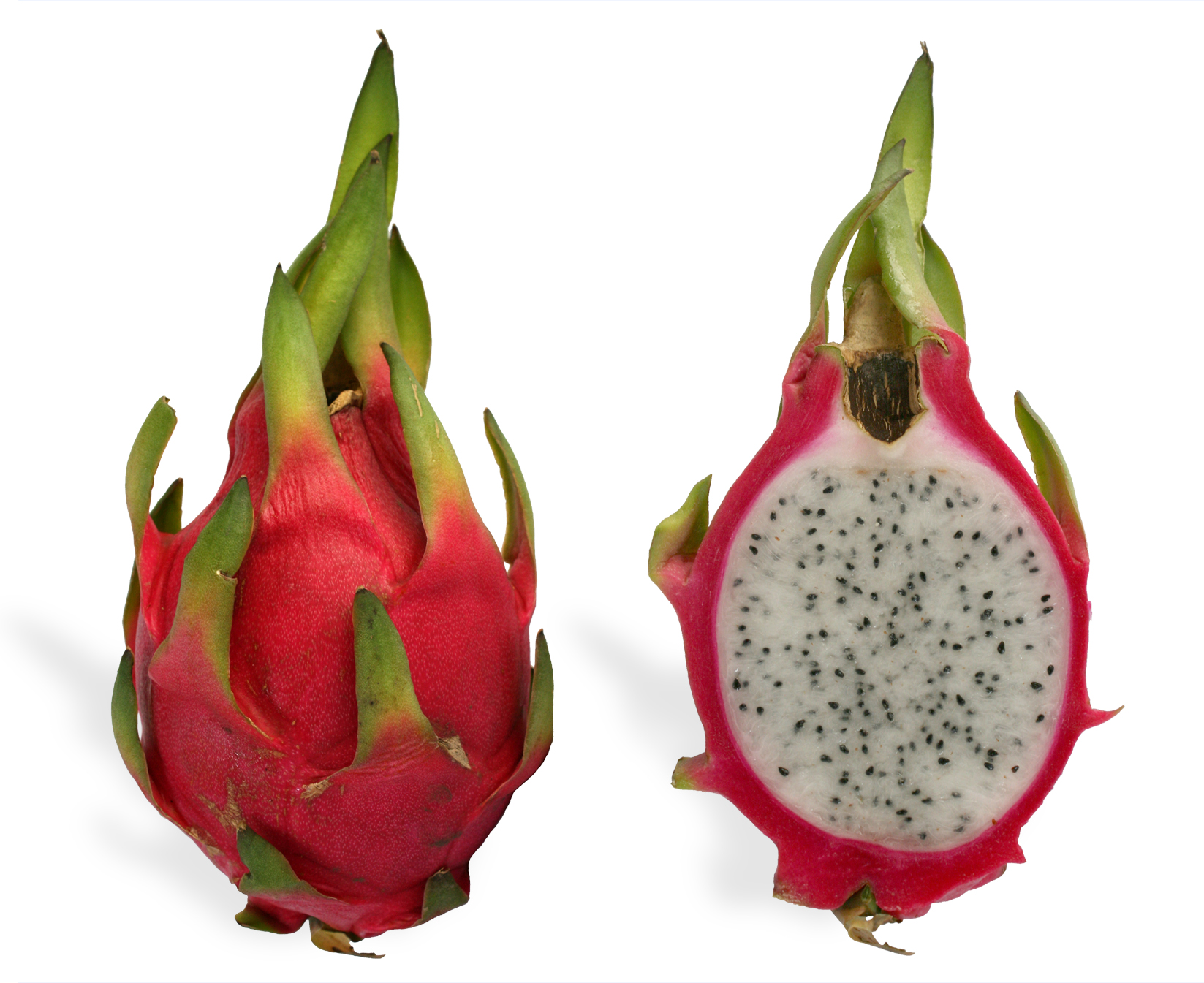
My next adventure will be to try the pitaya, or Dragon Fruit. It is one of the coolest looking things you'll ever set eyes on. They come with red skins and either red or white flesh with tiny seeds (black specs). I understand they might sour, but cannot describe them as I haven't bought one yet. Still, who wouldn't want some of this? Look at it, it's awesome!


UPDATE: If you enjoyed this article and the recipes in it, you can link to its companion piece, a dedicated Pinterest board you can refer to any time.




Monday, March 31, 2014

Yes! We've Got No Bananas Today.


I'm part Puerto Rican and I love plantains. You kinda have to. They take your Boricua card away if you don't like platanos... I ran this column before but Internet gremlins took it down and I think it has enough good information it merits a second show.
One of the main reasons plantains are a staple in Latin American and West African cooking is that the fruit is extremely versatile. Unlike bananas, plantains must always be cooked before ingesting. Functioning as vegetable and fruit, a plantain can be served as an appetizer, in soup, as a main dish and even as dessert. Some people make fermented drinks from plantains as well. Starch has never been so delicious!
In the Caribbean there are these magnificent delicacies: tostones (twice-fried green plantains), mofongo (mashed green plantains “stuffed” with crackling), and little mashed balls with garlic salt that make for a very earthy soup.
Puerto Ricans also use the yellow plantains and stuff them with cheddar cheese for piononos, and its big sister dish is a meat pie called pastelon. These are a little labor intensive, but worth the effort once you grow accustomed to working with plantains in your kitchen.
There are three stages of ripeness for a plantain:
  1. Green ones are relatively bland, much like root vegetables, but they pick up flavors and intensify them.
  2. Yellow plantains are medium ripe and slightly sweet.
  3. Fully ripe, are yellow with specs of black to fully black, and it turns softer to the touch as it ferments in its own juices, and smells sweet. Do not mistake this look for the fruit going bad, instead it is gold! At this point, it reaches a sweetness that is almost as unadulterated as fresh honey.
To peel a green or yellow plantain, slice off the tips and make a slit along the skin from end to end. Start peeling under running cold water; otherwise, its juices will run through and stain your countertop and hands.
The plantain stain is rather stubborn and Puerto Rican folklore claims it marks the soul of expatriates. Luis Lloréns Torres even wrote about it on a poem to the very stain, claiming that neither soap nor iron could take it off; and ends with the simple proclamation that as a Puerto Rican we'll carry the stain in saecula saeculorum. 
If the skin breaks, that’s okay, as you will discard it. To prevent oxidation place in a bowl of cold salted water before cooking -- plantains blacken like potatoes. If you employ this method, dry with paper towels before frying to prevent splatter. Ripe plantains can be peeled with relative ease, like a banana, because their skin is more pliable.

Plantain Bread

(Modified from a recipe from my late friend Carlos Sanchez)
Ingredients
1 cup mashed ripe plantain
½ stick of unsalted butter, softened
1 1/4 cups flour
2 eggs
1 ½ cups sugar
1 teaspoon baking soda
4 tablespoons sour cream
1 teaspoon vanilla
1 teaspoon baking power
½ teaspoon salt
Procedure
Beat butter until smooth; add sugar, eggs and sour cream.
Blend plantains, flour, baking soda, salt and baking powder. Add to the egg mixture. Add the vanilla and beat thoroughly.
You may add crushed almonds or raisins or even a few chocolate chips in the mixture.
Pour into a greased and floured pan. Bake in a preheated oven at 350 degrees for about an hour. Check with a wooden toothpick. When it comes out dry, the bread is done.

Plantain Chips (Platanutres)

1 or 2 large green plantains
salt
garlic powder
oil for frying
Procedure
Slice plantains paper thin using a food processor as you would for potato chips. Fry handfuls at a time until golden (depending on how hot the oil is, this should take a few minutes), do not crowd the pan or they’ll start sticking together. Place on paper towels to drain excess oil and sprinkle with a dash of salt and garlic powder. These are crispy and delicious on their own, with a tangy salsa, or dipped in a garlic sauce.

Oven Roasted Sweet Plantain

Cut the tips off a sweet plantain. Place in a baking dish and roast for 20 minutes at 400-degrees.
Take out and slit the skin lengthwise, peel back the skin and discard. Cut along the center and split in half lengthwise, apply a dab of butter to melt and a dash or nutmeg or cinnamon. (You can add a bit of a tangy shredded cheese over it for a sweet and savory combination.)
* - * - * - * - * - * - * - * - * 
These are simple recipes that can give the uninitiated a good starting point to begin working with plantains. If you are lucky enough to have a fully stocked supermarket that carries Goya frozen foods, you may try these out to assess their taste and texture. If you are luckier to have a Latin American restaurant near you and can afford a little treat, I highly suggest it. I'd start with tostones with garlic mojo sauce (or even the fried ripe plantains, which are richly sweet and kids will love it).
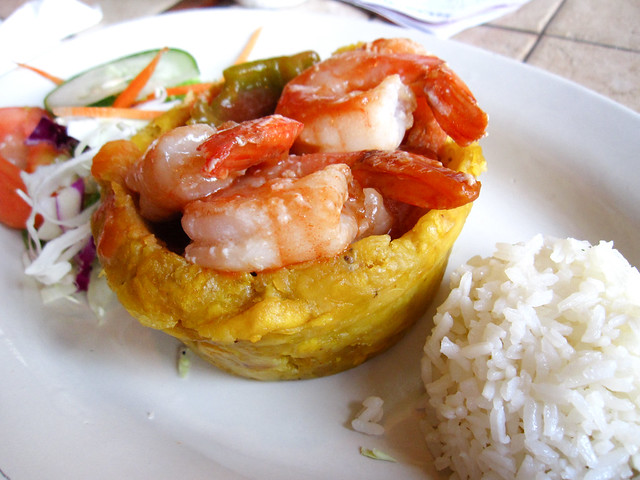
The Twitter feed #KaliFoodGoddess includes a fantastic recipe from the blog Delish D'lites for Plantain Cups with Shrimp and Avocado Salad: it is designed for a more experienced cook but a sensational recipe we look forward to making soon!