Google Analytics

Showing posts with label Pinterest. Show all posts

Saturday, May 11, 2019

Mélange: Senegalese Cuisine


2. Senegalese Cuisine

Both my mother and I have a trace of ancestry shared with folks from Senegal. It is difficult to determine whether this is entirely from my maternal side or if I also share a little bit from my paternal DNA. But then, the African ancestry is problematic because all the multicultural mixing means we strayed far from the motherland in many ways.

Senegal is the westernmost point in continental Africa (a nice swim across from Cape Verde). A base of operations used by the Portuguese, Dutch, and British slave traders; Senegal was eventually taken over by the French. Whether any Portuguese and French ancestry is attached to Senegal is unclear—we’ll never know!


Because of its colonial history, Senegalese cuisine is influenced by Northern African, French and Portuguese culinary traditions. And because Senegal is one of the most ethnically diverse nations in the African continent, regional variations of dishes abound.

Popular ingredients range from chicken and lamb (which make up for plenty of stew recipes). A coastal nation, Atlantic fish is also an important part of their diet. Their biggest crop is peanuts, and certainly there are plenty of peanuts sauce recipes in their repertoire. They also grow couscous, white rice, yams, lentils and peas. I like all of this, which adds to the mystery of why I don’t have more Senegalese dishes in my own catalogue. Because they are predominantly Muslim, though, they have no pork in their diet. Other than that, their food seems pretty tasty.

While it is entirely possible, I don’t specifically recall having any Senegalese food. I have had my eye on a recipe for a few years but it still hasn’t made the rotation: chicken stew (poulet yassa). My interest has not waned but we have encountered a problem: Mom seems to have developed an allergy to mustard and this means rethinking the marinade.

The beauty of Chicken Yassa is that it is such a versatile dish:

1. it can be made with thighs, legs, breasts or a whole cut up chicken,
2. it can be in winter or summer (grilled or in the oven), and
3. there are enough variations that adaptations are easy to conceive.


Chicken Yassa requires four important steps: (1) marinade (for taste as well as tenderizing), (2) brown meat, (3) sauté onions, and (4) simmer. The marinating can be done overnight, and the dish requires light hands-on work. You won’t have to stand watch over the stove while it cooks. So, if you make this for guests, you can enjoy their company—plus it can be made ahead and reheated.

And while the recipe and its taste profile seem familiar enough, what distinguishes this dish is the onion marinade. It gives it a nice kick. The dish is said to have originated in Southern Senegal, but I suspect a Northern African influence because the marinade resembles scabetche (or escabeche for my Latino cousins).


Poulet Yassa (Senegalese Chicken Stew)

For marinade:
4-6 onions thinly sliced
½ cup vegetable or peanut oil (divided)
5-6 cloves of garlic, minced
½ cup lemon juice (approximately 4 lemons)
½ cup red wine vinegar
1 chile pepper (or a jalapeño) chopped* (see notes)
2 tablespoons Sriracha mayonnaise* (see notes)
Salt and pepper to taste* (see notes)

1 whole chicken cut in serving pieces or 3-4 lbs in chicken thighs, legs, and breasts (skin on)
½ cup water (or low sodium chicken stock)

Optional:
One large carrot cut in ¼-inch slices
¼ cup of salad olives


Mix ¼ cup of oil and all ingredients together to create marinade and rub onto chicken. Refrigerate overnight.

Remove chicken from marinade. Grill chicken 10-15 minutes per side (brown but do not fully cook).

Heat ¼ cup of oil in pan on medium and sauté onions until soft and translucent.  Add rest of marinade, carrots and olives (if using), and water (or stock), bring to a boil. Cover and cook for 5-8 minutes.

Add chicken to pan, reduce heat to simmer. Cook until chicken juices run clear (20-30 minutes).


Notes:

1. To make the Sriracha Mayonnaise: mix 1 cup of mayonnaise, 2 teaspoons of powdered garlic, 1 tablespoon of Sriracha, 1 lemon juiced (if you have no lemons, you may use limes for a slightly different tartness, or substitute with a tablespoon or two of vinegar), and a pinch of sea salt (alternatively, you may substitute salt with a few dashes of Worcestershire sauce). This can be made ahead and keeps well refrigerated.

2. If using Dijon mustard (or my Sriracha mayonnaise alternative) you may wish to curtail additional salt—especially if you’ll also add olives at the end. The same can be said for pepper—it depends on how much heat you enjoy. Taste the marinade before adding to chicken, do not over-season.

3. Most yassa recipes include a cube of Maggi or chicken stock, but we omitted and used water instead to keep the sodium content relatively low.

4. You can use bell peppers, if you prepper a milder taste.


You may serve with additional lemon slices (if you like it tart). Serve over rice (white or brown) or couscous. Bon appétit, mon ami!

Friday, May 3, 2019

Mélange: Native American—Andean Cuisine

Those of you who know me, or who read Volume 2 of The Food Goddess cookbook, know that I am the product of several generations of interracial/multicultural marriages. And I have tried to incorporate dishes from all the ethnic groups and national regions that I knew about. I always loved the idea of having a global cultural heritage and making it my own.

After taking Ancestry’s DNA testing, we were surprised about what we each inherited but also what we both lacked that we expected to find in our personal maps. There were some surprises, and what I want to do is combine Mom’s and my results and add recipes for each country of origin we didn’t know about. And we have lots of choices because my people liked to travel and mix it up!

There are three goals here:
1. To expand our culinary repertoire,
2. To learn a little more about our ancestors and honor them in doing so, and
3. To inspire me to blog more regularly.

So this is the first in a series which I’ll call “mélange”—mostly because that’s just a medley and often a delicious one, so it seems appropriate. I’ll be exploring cultural entries from our collective DNA map and coming up with the most interesting recipes I find (and there may be some rumor, speculation and innuendo thrown in, maybe a fact or two, but mostly an excuse to cook!).

Countries and cultures will be chosen at random and will not appear in any preset order, except whatever whim drives me that week… To start us off, I will try to choose cultures and regional cuisines I haven’t covered yet, and then revisit those I am well versed in (and that I’ve shared with you already).


1. Native American—Andean Cuisine
Both Mom and I inherited a trace of Andean heritage, which in my mind translates to New World Highlander! And while I am not aware of whether this is a trace of my mother’s paternal grandmother or an older ancestor, modern day relatives appear to be spread out around the western coast of South America from Ecuador to Chile (see map).


And while I will certainly revisit each of these countries' cuisines, I wanted to start with Andean food in general. I love the idea of starting with something pre-Columbian. We could easily to lump it into some sort of Incan ancestor, the truth is that there are several cultures in the area--including the Atamaca, Aymara, Kichwa, Quechua and Uru people (not including the Colombian indigenous folks along the Andes).

The gifts Andean culture bestowed on civilization include the domestication of squash around 8000 BCE by the Las Vegas culture from present-day Ecuador. These mountain folks, through the centuries, mastered agriculture and had consumable crops that still exist today, and some of which I have indulged in with careless abandon—some even led me to criminal behavior and it is not the obvious one!—from potatoes to tomatoes, chile peppers, pineapples, peanuts, several varieties of beans, cotton and coca.

Andean cuisine is replete with vegetables, especially tubers, so the vegetarians and vegans will find great options here (just steer clear of anything that says cuy and ask no questions about it).

When we make a large batch soup--as opposed to a quickie wonton soup--on one of its leftover iterations, it is likely to get an infusion of cornmeal to thicken it (especially nice with a chicken asopao). And while soup and stew season is about to end here, we do have several rainy days coming our way so that cornmeal soup sounds awesome. The word chochoca is Quechua for a type of maize flour (cornmeal). The soup is generally made with beef or pork (spare ribs), but it works as a filling and satisfying vegetarian dish as well. Here’s an easy version to get you started.


Caldo de Chochoca (Cornmeal Soup)

½ cup of cornmeal
1 cups of water

2 tablespoons of vegetable or canola oil
1 ½ lbs of beef (for stew, in bite sized pieces)
1 celery stalk, finely chopped
1 leek, chopped
1 medium to large onion, finely chopped
4 cloves of garlic, minced
1 tablespoon of aji colorado* paste
6-8 cups of water
2 or 3 medium potatoes, cut in pieces
½ cup of shredded white cabbage
1/8 cup chopped mint
Salt to taste

Lightly season meat with salt and set aside. Heat oil in a Dutch oven under medium low flame. Sautee garlic and onion (until translucent but not so long that garlic browns). Add the aji colorado (see note below), and stir until well mixed.

Add meat, celery, leek, until meat is browned on all sides. Add water and bring to a boil.  Add potatoes, cabbage and half the mint leaves. Cover and cook until the potatoes are tender (at least 20 minutes).

Add the cornmeal and stir until fully incorporated (the broth will thicken and gain a velvety finish). Add salt, if needed, and cook for another 5 minutes.

Serve hot and garnish with remaining mint leaves.


Notes:
1. You may make your own aji colorado paste (panca pepper paste). If you want to make your own, there is a recipe here. If you have a good international section in your market, you may purchase any of these: Inca Food’s Aji Panca, Doña Isabel’s Panca Pepper Paste.

2. I saw a recipe that includes daikon, though I don’t know that this is a traditional ingredient. I saw another recipe that included corn on the cob, cut in one-inch pieces, added at the end as you add the chochoca.

3. You may use spare ribs, though this is best left for a lazy Sunday when you have time to let the broth simmer for an hour or more.

4. You may also make your own cornmeal, and there is a great piece about it here.


Thursday, May 4, 2017

Top of the Muffin to You!

I’ve never met anyone who doesn’t like a muffin—its almost-cake-like texture makes it feel like a guilty pleasure. (I’m looking at you red velvet muffins with cream cheese icing!) Cranberries and blueberries make delicious muffins too. Bananas, chocolate chip, apple, plain honey are all wonderful with a big steaming cuppa something warm. Even plain cornbread muffins, slightly toasted with a pat of butter, are pure perfection! (Although in terms of perfection, there’s a maple bacon corn muffin that I still have to try.)

Remember the Seinfeld episode referencing the top of the muffin as an excellent pastry delicacy…


Traditionally, American muffins have been on the sweet side – somewhere between dessert and a snack or a breakfast food.

The past few years have seen a proliferation of kitchen anarchists who have taken their muffin pans and turned it into something else altogether. Savory muffins are great breakfast food for folks on the go, but they also represent sturdy and tasty picnic items as well as buffet/buffet finger foods. They travel well, mostly, so they are perfect for brown bagging and kid’s lunch boxes.

Breakfast-for-dinner turns into a different kind of culinary adventure when you have a savory muffin (with a salad and a good bottle of wine)!

For recipe, visit the Pinterest board or go here.

The muffin pan affords the cook a freedom beyond the cake-like base. You can use other grains to form your muffin—from brown rice to quinoa. You can even line the pan in bacon and let that become the foundation for the morsel of yum. Shredded veggies or mashed beans may substitute for crust for the vegans.

Vegetables can be used in a dizzying array of ways, as well as spices and herbs. And if you do not eat meats or seafood, legumes and mushrooms fit well into the compact food.

Mac and cheese as a muffin!

Muffins tins have uses beyond muffins (like filled tiny pies, stuffed wontons), and we’ll explore that later, but for now I’ve curated a few dozen recipes (some repeats with interesting substitutions) that you may want to consider adding to your repertoire – whether for large get-togethers or your own romantic dining pleasure.

Visit the Pinterest board for recipes ranging from 
cheddar and bacon to chili eggplant to pea and chorizo muffins.

Savory muffins will make for an interesting change of pace and an elegant or fun dish. You can keep it healthy or make it richer with the right toppings (anything from a dollop of sour cream to whipped feta).

Wednesday, February 1, 2017

Pizza is the Only Love Triangle I Want

Pizza is magic. To me the word pizza always conjured New York, or at least escape from my life to the magical kingdom of my birth (and the pull to return to New York was a life-long instinct).


I grew up in Puerto Rico and back in the days I was living there, there were not a lot of pizzerias nearby–not that I was allowed to hangout or eat junk food (and, certainly, my grandmother would define pizza as “junk”).

I think the first slice of pizza I ever had was from a shop in the Bronx and I was about five. I’m pretty sure it was after a visit to the Bronx Zoo. That I remember it so clearly lends credence to it being the precedent. The memory may have more to do with the fact that I’d spend a whole day involved in a wild adventure with Mom. But the memory is also very specific about the flaky crust, the tangy sauce and its melodic marriage with cheese.

But I distinctly remember slices of pizza from little Italy, from Coney Island, from the theater district, from Wall Street, from the Yupper East Side and from El Barrio, from the West Side and from Chelsea. Each slice heaven in its own right.


I have great memories of pizza runs in Jersey City – where I almost relocated when I was 11 years old. One of my cousin’s classmates worked at the pizzeria on the way to school, Journal Square, McCrory’s, the movies, the roller skating rink, or even the record store (if you veered a few times).

When I moved back to New York, Brooklyn pizza loomed large in my social life because apparently there is a level of freedom teenagers attach to their ability to hang out at a pizzeria. You meet there after school, you take your dates there, and you wind down movie night at the pizzeria. Pizza is a self-contained food group for growing high school boys!


In college, leaving campus for a slice of pizza across the tracks from the Long Island Railroad was a special treat. As students, we had to pool our limited cash reserves to meet the munchies, and sometimes resorted to calling an order to non-existing rooms or wings at the dorms so we could “grab” the “undeliverable” pizza at a discount.

Then, when I started working and we moved to Bay Ridge, I ended up in an area where you had a church and pizzeria in almost every other block! In the city, I tried to taste pizza in every new neighborhood I visited. 


And yes, we visited every Ray’s Pizza, had a slice in each, and danced back to each establishment for good measure (though in that battle the true winner was John’s but that’s old news; you may read about that whole kerfuffle here).

I once had pizza in Connecticut but I wasn’t impressed (somewhere in the vicinity of the naval submarine base). Though the first time I had pizza in Boston it was awesome – delicious and magical, a white Christmas made better by a slice that was a meal in itself! I had a slice in Vermont. It was okay. I think there was a quick slice in Rhode Island, but it was just alright. I had a slice in Montreal and that one was pretty tasty (beat the heck out of Connecticut).

There are at least two dozen pizzerias within walking distance and plenty more that deliver (not Domino’s but mom and pop shops that have been part of our community). There is a Papa John’s next door to a pizzeria that has been in the neighborhood over 30 years (how rude is that?!).


Now that we have a bread machine, I intend to make my own pizza dough, and it occurred to me that I need not be limited in pizza any more than I allow in other favorite dishes. My first pizza has been on stand-by as we’re curtailing dairy for the moment. Instead of the traditional red sauce, the planned pie included ricotta with spinach and artichokes and sausage, Mozzarella and shaved Gouda.


Of course, I started collecting some fun recipes that I want to try (alternate sauces to the traditional, meat red sauce). I realize not all of you will have a bread machine, so I have tried to provide variety in as many ways as possible (you can use already made dough or improvise, create plant-based doughs, pizza invites creativity). Go check it out! Let’s make pizza. 

Friday, December 23, 2016

All Sorrows are Less with Bread

"I got a lotta problems with you people, 
and now you're going to hear about it!" 
(Relax... I think we’ll bypass the Airing of Grievances this year, or we’ll be here till Easter!)

It has been a challenging year for most of us in a number of ways. There is no looking back at 2016 without some scarring. It is imperative, then, we find a thing – no matter how seemingly trivial – to hang on to and say, “Ah, but THIS!!! This made it all pale in comparison…”

But a year that insists on throwing death and destruction at you kills the vibe every time you have it within grasp. It’s as if the whole world suddenly started signing Robbie Williams’ “Feel”:

I sit and talk to God
And he just laughs at my plans


We are resilient, though, and refuse to go down without a fight. With mere weeks to close out one of the most monstrous years in memory, a friend sent us an unexpected Festivus gift. It was a bread maker. I never considered a bread maker. But then, Cervantes wrote that "All sorrows are less with bread." Obviously, this gift is the thing to grab and make it the one point of bliss for 2016.

Mom made a few Stromboli, but she doesn’t like working with active yeast. Although I love the idea of making bread, am often annoyed by the inordinately complicated and long process. I am not the baker in the family...

Like Oprah, though, I love bread. 
Oh hush, you know you love bread too! 

We have great bakeries in Sunset Park and Bay Ridge. And the bread display at Trader Joe’s is a thing of fragrant beauty!

source: http://www.ittybittyfoodies.com/

If I’m honest, I do not expect 2017 to be a significant improvement from 2016, and the true beauty of the bread maker is that I’ll be able to maintain our love of bread without having to pay the increasingly ridiculous prices for specialty breads. (Though I also suspect that 2017 will be the year the gym becomes an awfully real thing because between the ice cream machine and the bread maker… OMG, thunder hips! Sure, more to love, but hell on the furniture.)

I think the thing Mom appreciates more than anything is the absence of active yeast and the chance of living the “Feed the bish!” episode from Anthony Bordain’s “Kitchen Confidential” in our own kitchen.

Thank you for keeping us with our irregular contributions here and on Twitter this year. Let’s hope we can share a lot more goodies in the next year! I’m starting one more Pinterest board for recipes I want to try in our bread maker (I’ll let you know how it works out, of course), and you are free to join me in the quest for the perfect loaf/bun/baguette...


If you celebrate, happy holidays! If you do not celebrate, remember that breaking bread with your fellows (whether family, friends, or neighbors) is a celebration of your own humanity. 

In 2017, no matter how hard life and the universe connive, 
please continue to assert your humanity!

Tuesday, January 12, 2016

Wonton Ravioli with Garlic-Herb Ricotta Filling

I spent a couple of hours in the kitchen this morning. I was mourning and creating, remembering the journey and thinking ahead... 

This is not the first meal I have made in 2016, but it is the first fresh pasta one… It's easy and great for when you need a little mental solitude. Remember last year when I told you that you can use wonton wrappers for far more than wonton soup and dumplings?

We used wontons as crispy cups (baked in muffin tins so that they cooked in the shape of pretty, tiny baskets). In the tiny cups, we stuffed a cream cheese and kippers filling that was tart and smoky and delicious.


The leftover wontons sat in the fridge for over a week before I decided that what I wanted to make was ravioli. (It was a toss-up between ravioli and guava-cheese empanadas.)

I found a couple of recipes we’d saved but I tweaked them. The garlic-herb recipe required fresh parsley that I did not have and I didn’t want to wait. The second recipe called for thawed frozen spinach (but I was ready right now and thawing takes time I did not have).

I could have waited, or used the microwave oven… but it was more a matter of wanting to clear my head – just dive into creating, and dance and blast Bowie for a little while. What I was looking for was the opportunity to ponder the art of creation and prepare myself to make some decisions that I must make.

Garlic-Herb Ricotta Filling
1 ¼ cup ricotta cheese
¼ cup Parmesan cheese
3 cloves of garlic, minced
2 tablespoons dried chives
1 tablespoon dried basil
½ teaspoon dried oregano
1 large egg
Salt and freshly ground pepper to taste

In a bowl, combine the garlic, cheeses and herbs and mix well. Add salt and pepper and mix thoroughly. Taste and adjust as needed. Add egg and mix.

The ravioli recipe called for one tablespoon of the filling and a second wonton over the first and a total of 48 skins (for 24 ravioli). I only had 16 wontons left, so mine are small ravioli.

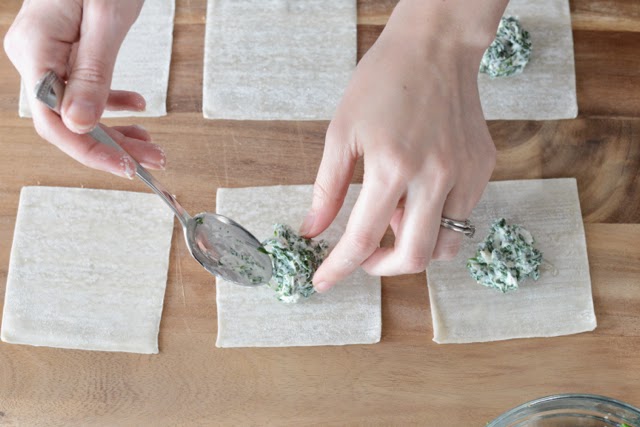
The method of filling them and assembling is simple. Place a teaspoon or so of the garlic-herb mixture in the center of the wonton. Wet the edges of the wonton skin, and fold it by bringing the top edge to meet the bottom (a half moon shape for round and a triangle shape for square wontons). Press the edges together and make sure you squeeze out the air in the dough.

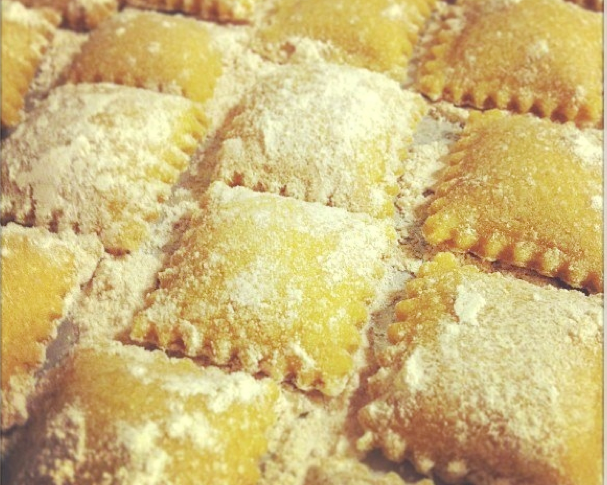
I used a rack to let them dry out (they harden a little too). After cleanup, I put them in a platter – on parchment paper dredged with a sprinkling of cornstarch so they don’t stick. They will remain in the fridge until dinner.

Tonight, we will cook the tortellini for some 3-5 minutes in boiling water, in batches of 5-6, and serve them topped with Mom’s fiery red sauce with sausage.


Here’s hoping your year is full of delectable creations, and lots of deliciousness – some a little savory and some a little spicy, others a little sweet and nothing bland; and that neither your cupboard nor your fridge are ever empty. And if you must lose people and things that matter to you, may you have enough good memories to hold close to your heart to sustain you. Happy New Year!


Thursday, December 10, 2015

Some Like It Spicy

One of the exciting prospects about the coming year, according to data collected by the National Restaurant Association, is an increase in spicy foods and African and Middle Eastern flavors. In terms of restaurants and available foodstuff, Brooklyn is setting the trends with already established businesses. For those of you not in the 'hood, or those who want to check it out at your own pace in your own kitchens, I offer four distinct spice blends that will be making the rounds in the national palate in 2016...


Harissa
If you want to get ahead of the curve, start with a bite of harissa (the Food Goddess has a Board for that!). In fact, we started the year with harissa! Harissa basically is a paste consisting of smoked chile peppers, garlic, olive oil, and spices found in Northern Africa and the Middle East. 


Harissa is sold already prepared, but I always want you to try to do it for yourself because you can control the ingredients that go into it. 

Dukkah
The Egyptians have a dip/sauce/condiment that is absolutely divine. It is a deceptively simple thing, a blend of toasted nuts and seeds that elevates food to ridiculous levels. Dipping bread into dukkah will make you moan. You can cook with it as well, and create a lovely crust on meats and even fish.


I read somewhere that it was a great desert food because it kept even after a few days out, and combined with olive oil and flatbreads, made for a good meal.

Check out the new Board with dukkah recipes (start with this basic recipe and then go wild!).

Baharat
Baharat literally means “spice” in Arabic, and it is a blend used throughout the Middle East. Recipes vary by region, but generally include pepper, cumin, and whole cloves. 

There’s a recipe here and a couple of dishes you may want to try.


Koshari (Egyptian rice, lentils and macaroni in spicy tomato chile sauce)

Berbere
Chef Marcus Samuelsson has a recipe for the Ethiopian spice blend. The blend is used for seasoning and frying meats and especially stews/curries. There are dozens of wats with berbere as a base.

You may try any of these recipes:
Ethiopian Mushroom Sauté (ingudai tibs)

~*~*~*~
I encourage all to look up other recipes. I love to do themed brunches and dinners, but if you prefer to try international cuisines one dish at a time, that’s cool too!