Google Analytics

Showing posts with label vegetables. Show all posts

Sunday, August 17, 2014

The Final Word on Escabeche


Escabeche is a gift that keeps on giving because the longer it sits, the more depth the dish develops. Flavors mesh and meld and mellow. It's alchemy in its most delicious form.

If I've done my job well, you've learned in the last few nights that escabeche can be made in a variety of ways, but basically it is an oil and vinegar pickling sauce that also seasons and marinades.

You can make it with vegetables, meats, fish, or a combination thereof. Once refrigerated, you can keep for weeks – though it may not last that long...

I've made serving suggestions, but by all means, add it to a sandwich if that makes you happy! Top a bowl of ramen with it! I encourage kitchen anarchy.

Tonight, I share with you recipes that I have gathered from the Web and which I believe have great potential.

I found two interesting red onion escabeche recipes. I cannot tell you which is the authentic Yucatecan version, but I suspect each will make a great and unexpected condiment at any table.


Pickled jalapeños will become a staple in some of your homes once you try it. It will be awesome on Mexican night, but if you enjoy a little heat in your life, this can easily become a side dish to a variety of dishes.


Vegetables in escabeche are great side dishes, served as cold or room temp salads:


Fish loves the pickling sauce and you can top rice or pasta with it for a very quick mid-week dinner.


I love these recipes because the first is a whole meal and the left-overs must be divine, and the second comes from Frida Kahlo (which is really cool):


The meat-lovers also get a few gems (including a couple of recipes from Bobby Flay and one for the crockpot):


These are only a few recipes to get you started, to get you experimenting on your own versions. 


UPDATE: If you enjoyed this article and the recipes in it, you can link to its companion piece, a dedicated Pinterest board you can refer to any time.


Monday, May 5, 2014

Mofongo in So Many Ways

Image: “Mofongo en el Pilón” by Yolanda Rodriguez, 
to view and buy her artwork, visit her Artist's Page at 


A few weeks ago, I wrote about plantains and shared ways to shop, prepare and cook them. A very versatile fruit! I even mentioned the plantain's stain as the metaphysical soul of the Puerto Rican, the subject of poetry no less.

We were discussing comfort foods (there was mention of chocolate, cheese, mashed potatoes, and bacon – of course). To Puerto Ricans, whether island-bound, in the mainland or spread across the globe, the mere mention of mofongo is cause for sighs, salivating, and all sorts of warm fuzzies. Dominicans have a similar dish they call mangú and Cubans have a boiled version they call fufu.

Along with asopao (soupy rice), arroz con gandules (rice with pigeon peas), and lechón asado (roast pork), mofongo is one of the island's national dishes.

Clearly influenced by its African ancestry, mofongo is a dish composed of fried green plantains. Traditionally, the fried slices are salted, placed in a pilón (a marinaded, wooden mortar) and mashed down.


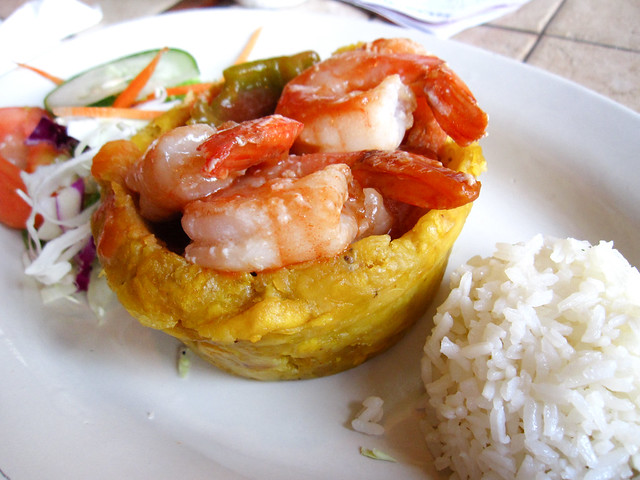
Some add butter at this stage, I prefer a good virgin olive oil, and garlic. The mofongo is then served with a garlic sauce and generally “stuffed” with chicharrón (crackling) or roast pork (new fusion versions also include shrimp, lobster, and other fried meats, as well as vegetables).


Then, there are several ways to top it, from the aforementioned ajilimójili (garlic sauce) – from broth, pureed seafood, and even spicy black beans.

There is a whole new entity that has entered the arena: trifongo. This culinary sexy beast includes green plantains, ripe plantains, and yucca (cassava).


Trifongo
2 green plantains
1 ripe plantain (yellow)
1 small yucca

oil for browning
salt


Pick yellow, not blackened, ripe plantains or the dish will come out really sweet (dessert sweet).

Peel yucca and cut in quarters. Parboil 5-10 minutes depending on quantity. You want it softened and you can remove the fibrous filaments in the center. (You can do this step ahead of time and refrigerate the yucca.)

You'll take the skin off as instructed earlier, slice and set aside. Some people place the plantain slices in cold, salted water until ready to start (dry before placing in frying pan).

Heat oil, I use enough to cover the bottom of a cast iron pan up to about 1/8th of an inch (about a quarter cup). Place plantain slices and brown (this takes no more than 3 or 4 minutes per side). Ripe plantains will cook and caramelize faster. Brown separately so that the green retain their savory and the ripe ones retain sweet.

Brown the yucca, also a few minutes each side.

Set aside the cooked ones on paper towel to absorbed extra oil, salt immediately. Place in pilón, mash. Add oil and garlic, or hot sauce, fried meats, to taste. If you do not own a pilón (mortar and pestle), you may use a spoon to smash the plantain and yucca, and a bowl to mix them.


You can serve the monfongo or trifongo in your pilón (that's the traditional way). If you don't want to deal with peeling or cannot find the fresh ingredients, Goya has frozen plantains and yucca. It's convenient, but I cannot vouch for the taste and texture as I have not used these products.


The result is crunchy, creamy, filling, slightly sweet, earthy, sexy, velvety and delicious. If you are not entirely sure you can hack it in your own kitchen, find a restaurant that serves it so you can see it, smell it, taste it, and fall in love with it. Then you can try it. You will not regret it.


Monday, March 31, 2014

Yes! We've Got No Bananas Today.


I'm part Puerto Rican and I love plantains. You kinda have to. They take your Boricua card away if you don't like platanos... I ran this column before but Internet gremlins took it down and I think it has enough good information it merits a second show.
One of the main reasons plantains are a staple in Latin American and West African cooking is that the fruit is extremely versatile. Unlike bananas, plantains must always be cooked before ingesting. Functioning as vegetable and fruit, a plantain can be served as an appetizer, in soup, as a main dish and even as dessert. Some people make fermented drinks from plantains as well. Starch has never been so delicious!
In the Caribbean there are these magnificent delicacies: tostones (twice-fried green plantains), mofongo (mashed green plantains “stuffed” with crackling), and little mashed balls with garlic salt that make for a very earthy soup.
Puerto Ricans also use the yellow plantains and stuff them with cheddar cheese for piononos, and its big sister dish is a meat pie called pastelon. These are a little labor intensive, but worth the effort once you grow accustomed to working with plantains in your kitchen.
There are three stages of ripeness for a plantain:
  1. Green ones are relatively bland, much like root vegetables, but they pick up flavors and intensify them.
  2. Yellow plantains are medium ripe and slightly sweet.
  3. Fully ripe, are yellow with specs of black to fully black, and it turns softer to the touch as it ferments in its own juices, and smells sweet. Do not mistake this look for the fruit going bad, instead it is gold! At this point, it reaches a sweetness that is almost as unadulterated as fresh honey.
To peel a green or yellow plantain, slice off the tips and make a slit along the skin from end to end. Start peeling under running cold water; otherwise, its juices will run through and stain your countertop and hands.
The plantain stain is rather stubborn and Puerto Rican folklore claims it marks the soul of expatriates. Luis Lloréns Torres even wrote about it on a poem to the very stain, claiming that neither soap nor iron could take it off; and ends with the simple proclamation that as a Puerto Rican we'll carry the stain in saecula saeculorum. 
If the skin breaks, that’s okay, as you will discard it. To prevent oxidation place in a bowl of cold salted water before cooking -- plantains blacken like potatoes. If you employ this method, dry with paper towels before frying to prevent splatter. Ripe plantains can be peeled with relative ease, like a banana, because their skin is more pliable.

Plantain Bread

(Modified from a recipe from my late friend Carlos Sanchez)
Ingredients
1 cup mashed ripe plantain
½ stick of unsalted butter, softened
1 1/4 cups flour
2 eggs
1 ½ cups sugar
1 teaspoon baking soda
4 tablespoons sour cream
1 teaspoon vanilla
1 teaspoon baking power
½ teaspoon salt
Procedure
Beat butter until smooth; add sugar, eggs and sour cream.
Blend plantains, flour, baking soda, salt and baking powder. Add to the egg mixture. Add the vanilla and beat thoroughly.
You may add crushed almonds or raisins or even a few chocolate chips in the mixture.
Pour into a greased and floured pan. Bake in a preheated oven at 350 degrees for about an hour. Check with a wooden toothpick. When it comes out dry, the bread is done.

Plantain Chips (Platanutres)

1 or 2 large green plantains
salt
garlic powder
oil for frying
Procedure
Slice plantains paper thin using a food processor as you would for potato chips. Fry handfuls at a time until golden (depending on how hot the oil is, this should take a few minutes), do not crowd the pan or they’ll start sticking together. Place on paper towels to drain excess oil and sprinkle with a dash of salt and garlic powder. These are crispy and delicious on their own, with a tangy salsa, or dipped in a garlic sauce.

Oven Roasted Sweet Plantain

Cut the tips off a sweet plantain. Place in a baking dish and roast for 20 minutes at 400-degrees.
Take out and slit the skin lengthwise, peel back the skin and discard. Cut along the center and split in half lengthwise, apply a dab of butter to melt and a dash or nutmeg or cinnamon. (You can add a bit of a tangy shredded cheese over it for a sweet and savory combination.)
* - * - * - * - * - * - * - * - * 
These are simple recipes that can give the uninitiated a good starting point to begin working with plantains. If you are lucky enough to have a fully stocked supermarket that carries Goya frozen foods, you may try these out to assess their taste and texture. If you are luckier to have a Latin American restaurant near you and can afford a little treat, I highly suggest it. I'd start with tostones with garlic mojo sauce (or even the fried ripe plantains, which are richly sweet and kids will love it).
The Twitter feed #KaliFoodGoddess includes a fantastic recipe from the blog Delish D'lites for Plantain Cups with Shrimp and Avocado Salad: it is designed for a more experienced cook but a sensational recipe we look forward to making soon!