Blog companion to the cookbook series, the #KaliFoodGoddess weekend Twitter feed, and the Pinterest boards. Curating recipes for your kitchen adventures!
I think we have established
that I love avocados. Growing up in Puerto Rico, I often thought that no meal
was complete without avocado. Over the years, I have shared some of my favorite
avocado recipes (here,
here,
and in the Amapola Press Pinterest board).
And there is no avocado recipe that doesn’t get my attention!
A summer staple now, we
keep flash frozen shrimp in the freezer—always good for a quick meal. Whether
boiled with a dash of Old Bay or quickly sautéed with a sprinkling of garlic
powder and some sort of crushed pepper, the warm shrimp served with diced
avocado and topped with lemon (or lime juice) is the perfect centerpiece to a
big salad. And prep and cooking time will never exceed 10 minutes.
The combination of salty
and sweet in a creamy marriage is absolutely enchanting! It’s also filling.
And just as easily as you
used to make a big salad, you can use the mix for tacos, for a rice bowl with
black beans, or as a dollop to dress up a clear broth or a gazpacho.
I love ceviche with
avocado, and fried fish with avocado, and fish stew with avocado. Avocados are
very accommodating that way: they’ll be just as delicious in a tuna salad as in
a topping for lobster rolls.
Our latest obsession has
been adapting this Venezuelan Avocado Chicken Salad
to our taste (though we admit the recipe as written is pretty darn great!). We’ve
been making enough so that after a salad we can also have sandwiches the next
day. We’ve been adding marinated jalapeño slices to it, Sriracha, a lemon
pepper mix Mom loves… We doubled the garlic, of course. And it has been too hot
to make arepas, but that’s next (come on autumn!!!).
Our next tasting joy will
be trying out a dairy free avocado pesto,
which I believe will be the perfect sauce for zoodles and grape tomatoes.
SOURCE: Wikipedia Commons
For the record, avocado
goes well with red meat too – though we are trying to limit our consumption of
it. We use an avocado crema as a spread for steak sandwiches instead of mayo. I
generally whip the avocado with a little lemon juice, pepper, a dash of salt
and olive oil, but I love this recipe too.
We’ve moved to a heart
healthy menu but we have not sacrificed taste—just added a little less salt to
our dishes and relied far more on our little grill to cook our meals. Through
it all, I get to continue my love affair with the avocado.
It was the perfect storm of details that need no rehashing -- psychotic weather, ailments, grieving, March Madness, and hyperactivity leading to the holiday...
We found ourselves running
out of food and awaiting a springtime snow shower that may leave in its wake
anything between a few inches to quite a few. Neither one of us was feeling our
best, so the question became what we’d do about dinner.
Image from https://www.livestrong.com
Mom had bought some ground
turkey and ground pork to make a different kind of meatloaf—but for any number of reasons we didn’t get around to it.
On Sunday, I divided the turkey
in half and the pork in thirds. I broke up the meats, lightly seasoned with salt
and pepper and garlic powder, and mixed in a bowl. I julienned a
small onion and sautéed first the onions and then the meats as I boiled water for pasta. The noodles and my
bastardized and tomato-less Bolognese were ready at the same time and I let it
bind with prepared pesto sauce.
The turkey is pretty
neutral and takes on other more dominant flavors. The sauce is relatively light
but it takes well to the pesto (the pork does not dominate the basil sauce). You can add the pesto to the meat before
mixing with the noodles, and the turkey will absorb some of it. It’s a comfort taste
for a meal that can be prepped in less than 10 minutes and cooked in less than
15!
After a week of
insane Easter Bunny duty making cookies and candies, Mom's bum knee declared war and my own body was fighting demonic germs. I thought we should have a soup. Of course, chicken soup is the
standard health aid but the only chicken we have is frozen solid.
I still had half the turkey
and 2/3 of the pork.
I julienned my remaining
small onion, minced the remnant pieces of garlic. I put aside a couple of
tablespoons of capers in some brine and about a teaspoon of lemon juice. I used
about a third of the pork (somewhere between 6-8 ounces or the amount you’d use
for a decent sized burger). I seasoned the meat generously with pepper and Worcestershire
sauce.
As I prepped, I started boiling water. Once it started bubbling, I added chicken bouillon. You can use meat
or even vegetable stock, but I like the chicken to start. To it, I added a ¼ cup
of rice. This is going to seem redundant in a minute, but do it anyway. The
rice adds a velvety touch to the soup, and it will make for great leftovers.
Simmer the soup and rice on
medium low flame for at least 20 minutes.
Sweat the onions in extra virgin olive
oil, over a medium low flame. Once translucent, add the garlic and when it
cooks through add the capers (3-5 minutes). Mix well and add the meat. Sauté
meat until fully cooked, breaking up further with spatula, for approximately 5-8
minutes.
At this point the rice is
about halfway cooked. Add meat to soup pot and also add pork dumplings. They’ll
rise in about 5 fives and finish cooking in another 5 minutes. Taste the liquid
and adjust seasonings, if necessary. Needless to say, it is better to under season
and rectify at the end than to over season and be left with something inedible.
The salt, pepper, Worcestershire,
lemon, capers and brine will give the meat a little smokiness that will lend
the dish several layers of flavors. I recommend 4 dumplings and perhaps a
serving spoon of the meat/rice mixture per bowl (which will helpfully settle in
the bottom of the pot). This leaves you plenty of soupy rice with picadillo as leftovers.
In less than half an hour
you’ll have something that has depth, and a little heft, that is far more
sophisticated to the palate than it has the right to be! And the best part (for
us) is that I left enough for a couple of bowls for the cold day we expect in
two days. And yes, you can have depth and complexity with ground beef, but I find the combination of meats--as with meatloafs--more interesting and satisfying. Pork brings taste and a little fat, turkey and chicken are neutral fillers, veal is lean and beef is more robust.
Staples should always go beyond what's in the spice rack or cupboard. I try to have dumplings in
the freezer for quick meals or appetizers. It’d also be cool to
have already divided ground meats for fast weekday meals. Most ground meats may
be refrigerated for a few days plus a couple more days after cooked. It’s
probably best to divide the meats, label, and freeze—it’ll keep between 3 to 4
months, and you can thaw overnight in the fridge.
I have enough turkey
and pork for two burgers, which will be grilled and embraced in the gooey
goodness of Muenster cheese. And I realize that is a lot of the same thing in
the space of 7-10 days, but each dish is sufficiently different to keep the
palate happy.
I can make picadillo and combine with black beans
for a Cuban rice bowl (with a couple of lime wedges on the side and a couple
slices of avocado). Or we could drain it and make savory turnovers (pasties). Or tiny meatballs! I work well under pressure, I don't need a menu—just send me to the kitchen, coach!
We had a friend who'd proudly assert to anyone who’d listen that they hated leftovers and ate absolutely no
leftovers, nope, not ever. This left us confused because we know something they
apparently do not: Sometimes leftovers are tastier because ingredients get a
chance to consummate the marriage, as it were.
This is true of pasta meat
sauces as it is of soups, meatloaf and roast pork—let it sit a day or two and I
swear to you it will taste better than the moment you first plated it after
cooking it! Sometimes in winter we start a soup that morphs from chicken noodle
into three different kinds of soup, if not more (leftovers serving as a base
for a new batch of soup).
Our friend was not a cook,
and perhaps that was part of the problem; though they did not seem to enjoy
food in an epicurean way. There was shame and regret, like their religion, but
not joy in eating—it filled no voids.
Mom and I start the year
recycling elements of the New Year’s meal—leftover caviar becomes a topping to
Mom’s birthday omelet. Somewhere between Boxing Day and the Epiphany, we
combine leftover cheeses, mousses and pates and make a richly delicious quiche.
These are meals made almost entirely out of leftovers but nothing to sneeze at
proverbially. Funnily enough, the quiche tastes better as leftovers (so leftovers of leftovers).
This year we discovered a
new reason to recycle: Trader Joe’s tapenade. Making your own tapenade is easy
enough, but the Trader Joe’s version is pretty darn good. Tapenade
can be made in less than 10 minutes, and can be a really satisfying
snack/spread/appetizer--but you have to start by buying good quality olives.
The beauty of Trader Joe’s is that you can have a variety.
Halkidiki olives (image credit: Olivellas S.A.)
Trader Joe’s carries two
varieties of tapenade: the original (and mellower) spread is a blend of Kalamata,
black and green olives; and the other includes Kalamata and Chalikidiki olives.
Kalamata olives are the large, meaty Greek black or dark brown olives. Chalkidiki
(or Halkidiki) olives are large green fruit that have all manner of magical
lore attributed to them (including as a PMS cure). The tapenade keeps as long
as it remains refrigerated, so you can enjoy it as a snack for as long as it
lasts.
So far, my favorite quick meal
involves tilapia fillets (2 per person). Spread a tablespoon of olive oil to
cover the bottom of an oven pan, season the fish lightly with salt and pepper, top
with a tablespoon or two of tapenade and add a sprinkling of grated Parmesan.
Bake for 15-20 minutes (temperatures depend on how thin the fillets are -- 375 for thinner fillets up to 425-degrees for heftier pieces, or you can broil for no more than 10 minutes).
I put the fish in oven as
water starts to boil for rice and finish both at the same time, but this dish will
also go well over pasta or a variety of vegetable side dishes. I
suggest finishing it off with some Sriracha—but you can also bake in chopped
chilis over the fillets.
The fish will flake easily
(and you can use cod, sole, flounder, snapper or any other white fish), and it
will simply melt in your mouth, the spread will create a savory and soft crust
over the fish. The simpler the better, but you can garnish with fresh parsley, cilantro or dill to taste. If you enjoy rice bowls, I can see adding a fried egg to it and
taking it all to a whole new level.
Next we may try game hens
stuffed with tapenade. I’d also love to try some of the tapenade in black bean
soup. We are going to recycle the heck out of this tapenade!
We knew this woman years ago. I
disliked her the moment we were introduced. We rarely saw her, except around
the holidays, so as we approach the holidays, I sometimes think of her. I
remember having a ridiculous conversation with her as she told me that her
boyfriend’s family knew how to have a really classy Christmas. “They’re white,”
she explained. “They had lasagna.” She was very impressed. “Really classy,” she
repeated it in case I missed it.
Soon she began speaking in pronouncements, Her Majesty did...
I was a little confused because I had spent
a cringe-worthy twenty minutes in a fruitless and joyless conversation with her
guest (whom I found out was both her boss and lover). The topic of the
traditional Hanukkah lasagna had not come up, but he did spend a good portion
of the time we were speaking loudly telling me how no one present has living
life properly. He had an opinion about how we were each wrong in our approach
to [pick a topic]. I drank a LOT that night.
There was no joy in knowing that uppity twit, especially because her premise was that she'd outgrown being Latina and she ascribed true class only to white folks. Her self-hate made me sad. Puerto Ricans tend to relish telling people their soul is stained by plantains. But she was not one of us and her pride tended towards other qualities beyond her ethnicity or nationality. But this is about food, don't worry about whatever happened to her.
That story comes to mind every time I see
the gastro types in Puerto Rico trying to "elevate" the local cuisine, from its "humble, peasant and slave origins." Last spring I saw a recipe circulating around the interwebs about Puerto
Rican lasagna… Huh? I was curious
what this newfangled pasta dish could be. It turned out to be a pastelón. Not that everything involving alternating layers should be called or likened to a lasagna.
I wrote about it a
few years back and included a recipe in the cookbook. A pastelón is a big, meat
pie. In the Caribbean there are a few varieties, but traditionally the filling
is made of picadillo. Picadillo means chopped or minced (meat). What makes the
pastelón unique is a plantain crust—which also makes it gluten free.
In Puerto Rico, the
"crust" is generally made of slices of ripe plantain fried to a golden
crispness. In the Dominican Republic, the crust is made of extra ripe mashed
plantains. I've seen a Cuban combine the two and create a delicious hybrid (mashed bottom and slices up top). Of course, varieties abound and every Caribbean mother and grandmother has her
own recipe!
Pastelón can be made
with chicken or shrimp fillings too; and, it is rumored, there are vegetarian
recipes floating about. While the pastelón is a meal in itself, it can be
served with a simple tossed salad, or a little rice. Macaroni salad is
surprisingly good with it as well.
Heat oil in pan and
sauté onion, garlic and pepper until softened. Add the meat and brown. Add
tomato paste and herbs, season and mix. Cook for about 10 minutes on medium
heat until meat is fully cooked.
To season you may
use a dash of salt or a packet of sazón. As an alternative, you may also season
the meat before cooking with a few dashes of Worcestershire sauce. You may add
a third to a quarter cup of water (which you'll allow to evaporate). You may
substitute with red wine vinegar or cooking wine. And, if your heart can take
it, a dash or two of hot sauce can add another dimension to the taste. Instead
of green peppers, you may substitute with sweet and hot chilies.
The picadillo can
include any of the following, depending on your taste: raisins, diced green
apples, salad olives with pimentos. You can also add about a cup of frozen
peas, green beans or corn (or use mixed vegetables that come already diced for
your convenience) -- add at the last minute of cooking to heat through and mix
thoroughly.
Ultimately, what you
want is moist but not saucy filling.
You can prepare the
picadillo a few days ahead and refrigerate. This also allows all the flavors to
marry. Heat slightly before filling pastelón or bring to room temperature.
YES: as I always
encourage, be a rebel, make it your own.
I’m giving you the basic steps, you
run with it as you wish!
Cut the ends off the
plantains, cut in halves or thirds lengthwise, and split the skins (see the
archived article on plantains for a more detailed explanation). Place in pot of
salted water and boil for about 10 minutes or until very tender. Drain water
and remove peels.
Mash plantains with
a fork, add soft butter and incorporate into the mashed bananas.
Spray a baking dish
(you may use a pie dish or even a lasagna pan, depending on what you have
available). Spoon half the plantain mixture on the bottom and smooth out the
layer, top with a third of the cheese and a layer of meat. Add cheese to top
the meat. Spoon the rest of the plantain mixture and top with cheddar. [NOTE: This
is a skinny version, but you can add about 2 or 3 large eggs, beaten, as a
binder.]
Place in oven,
preheated to 350° F and heat through until cheese is melted and golden brown
for about 30-40 minutes. Cooking time depends on whether the filling is already
warm, of course.
The result is an
enchanting combination of sweet and savory (and picante) flavors. The textures
go from soft to crunchy. The bananas harden on the outside to literally create
a crust, but the inside will remain soft. The important part is that you can
always play around with the filling to meet your exact specifications. It's
different and quite comforting. It yields 6-9 portions (depends on whether this
is a side dish or the main dish), and all told you can make this dish for less
than $10!
Piononos
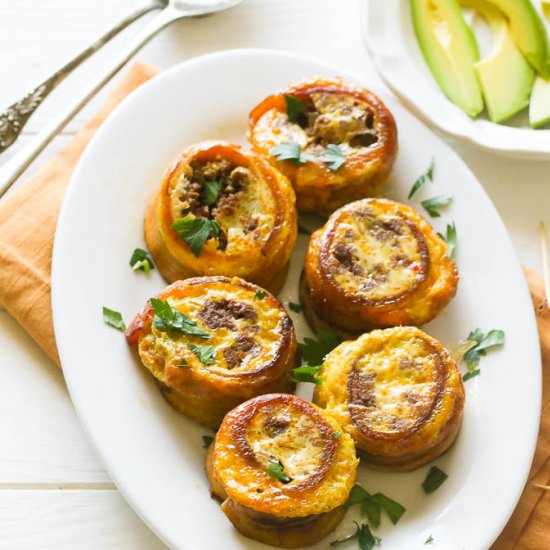
For those of you who
prefer to downsize, you can try piononos,
which are individual servings of the pastelón. It starts with maduros (yellow
plantains, with or without spots—the more spots, the sweeter but also the
softest to work with). You will cut plantains in half and then slice lengthwise,
fry them in oil until browned (the sugars in the fruit will caramelize). Dry
them off on paper towels and, until cool enough to handle.
Now you have two
choices, you can make rounds and close with toothpicks and fill with picadillo,
top with cheese and then egg. You can fry them until the egg sets and the
cheese bubbles. A healthier version is to line the inside of a ramekin or a
muffin tin with the plantain and then fill with picadillo. You can heat it up
at 350-degrees for about 20-30 minutes until the egg sets and the cheese melts
and bubbles.
As an alternative to
the meat picadillo, you can substitute ground pork for a completely different
taste and texture. I usually steam up sausage links, remove the casings, and
chop it up before seasoning and cooking with sautéed veggies and herbs. If
cheddar is a little strong, you may use a milder cheese. This is a very versatile
recipe. If you prefer a more savory taste, you can use plantains that are beginning
to ripen but have not reached maturation (skin is green and turning yellow).
I’m thinking it’d go well with a minced
curried goat too! And I’ve heard there are crabmeat piononos I have not tasted
yet (culinary goals, baby!). A fabulous presentation and a tasty alternative: serve
with slices of avocado (plain or with a dash of olive oil and lemon juice).
So, if a pastelón is a Puerto Rican lasagna,
the pionono is like a tiny sweet and savory Christmas wreath on the plate. You
can prep ahead of time and cook later. Can’t tell you whether it freezes well
because I’ve never seen leftovers of this stuff in my whole life! Usually the pastelón
is made with rice and beans, but it can just as easily be served with green
beans, carrots, or a salad. The piononos make it easier to portion control, if
you want to keep it lighter. I personally think it is all very classy indeed!
For a better idea of what each step might look like, check out this:
Let's talk eggs for a minute or two. Just to cleanse our palate of all the bad eggs on the news, shall we?
When I was a kid, I had a
love/hate relationship with eggs. I loved eggs, but not everyone understood the
delicate nature of the product. Eggs are versatile in that they’ll let you cook
them in variety of ways, temperatures, and mixed with herbs, meats and
vegetables of all kinds. But a bad cook can ruin eggs so easily…
So to my literal mind a
“bad egg” was not necessarily a morally deficient person but what happened when
a bad cook got hold of an egg.
The word tortilla (omelet) carried the promise of
adventure because the eggs could be enveloping any number of delicious
ingredients; and sometimes they cleverly hid the surprise under a cover of
golden richness. But not always.
I had a cousin who drenched
everything he ate in ketchup. He did not taste his food. His go-to move was to
slather enough ketchup to hide the original offense and then a little more so
that the only aftertaste would be whatever Heinz intended it to be.
I have no
recollection why I spent the night at their house, though I suspect it may have been at
the heels of the Hooker Incident--a story for another blog--and that morning the matriarch in that
particular house (being very careful not to “out” her) cooked us breakfast. "I'll make you eggs," she announced. And I got excited at the prospect. But Cousin was circumspect, at best. He
took out the ketchup and pointed to it. “You’ll need this,” he said and winked at me. I shook my judgy little head, because although not of school age yet, I knew his culinary crime to be immense.
First, she threw a big soup
spoon full of margarine on a small frying pan and then the eggs. She shook a dash of salt into the pan and put on the flame as high as it would go--explaining the presence of a couple of fire extinguishers in the room. I think it may have been intended to be sunny side up until she broke a couple of yolks
and we ended up with the inevitably scrambled
eggs, or so I was led to believe by my cousin. (Intending to add onions to it but not doing so because they made you cry
does not count! But also, I believe she tried to cut an onion one time and then tried to dry a tear and knocked the glasses off her face with the knife. She didn't cook again for weeks.) And while she referred to that abomination she served as a “tortilla”; she
didn’t put anything on the eggs, so technically it wasn’t an omelet. It was just
plain scrambled eggs.
I mean, really: she didn't even roll it up pretty on the plate. Come on!
Well, plain, overcooked,
slightly burned scrambled eggs with the consistency of soft rubber with one salty spot. But
at least the margarine made it all slippery and, thus, easier to swallow. The ketchup
hid its imperfections, and added sweet and tangy to something that did not need
that type of complexity. Frankly, what that dish needed was a garbage bin and a
Requiem Mass so we could, all involved, ask the Lord’s forgiveness for what was
done to those poor, defenseless eggs.
That morning, for the first
time in my life, I ate toast for breakfast and begged the Universe to reunite
me with a good cook soon! I have not prayed much in this lifetime, but when I do, I am a pragmatist.
There is a distinctly
Puerto Rican omelet with onions and Vienna sausages that remains a favorite comfort food
to this day. One of my first adventures in the kitchen was making cheese omelets. And once I set out on my own, I freestyled with herbs and vegetables, diced ham and tiny shrimp, and then I set to learn the breakfast secrets of my neighbors in Brooklyn.
Certainly, anyone who has found
themselves in financial straits knows that eggs-for-dinner is one of the best
things to come out of peasant cuisine from around the world! It is also handy to know a
few egg dishes when you work long and strange hours and have no desire to spend
your free time standing over a hot stove.
One of the things I
perfected was taking the simple tortilla
de papatas (the world famous Spanish potato omelet) and tweaking it into a meal. I use
leftover Spanish potatoes—potato slices cooked with sautéed onions and garlic from
an old recipe from some monastery, if I remember correctly. It's really a bastardization of a Cuban omelet.
I remember checking off
this photo grid of popular tortillas served in Madrid and pairing them to
different wines during our brunch days. Each tortilla had
its own personality, some more robust than others, some more fragrant, others
delicate and others just badass!
There are places in Spain (from small delis to bars) that serve nothing but omelets (swoon!)
The most memorable
entries included tortilla de mariscos
(with seafood, including mussels, shrimp, and cuttlefish), tortilla de sardinas (with sardine filets laid over the eggs as
they cook), tortilla de atún (with
either fresh or canned tuna), tortilla de
hígado de pollo (with coarsely chopped chicken livers), and tortilla catalana (made with a spicy
Butifarra sausage and cannellini beans).
Whether you chose to have your omelet with a salad, with pan y tomate (brushing
off a tomato’s juices over slices of bread), under gravy or over a grain or
pasta, all of these Spanish omelets are delicious. And for the flexitarians
options run from wild mushrooms, to asparagus, spinach and garlic, roasted
tubers, and mixed herbs; and depending on your rules about dairy, an
international array of melty cheeses to enchant the palate.
Of course, every culture has
its own version of an omelet
and you can open your horizons by cooking beyond borders.
I have been feeling more
than a little conflicted about my Food Goddess activities. Nothing I do in that
regard is offensive but it feels silly, unimportant, and maybe a little tone
deaf knowing that a portion of my audience living in Puerto Rico hasn’t had a
decent meal in weeks.
Taino symbol for coquí
Most of our people are okay
(not great, but alive, sustained minimal damage and are ready and eager to move
on). Some have sustained more property damage/flooding than others. This isn’t the
case for everyone we know. There are a few people “missing” or displaced, and
not in a position to communicate. We have elders in hospital, and in no
position to be moved. Most still have no cell service, intermittent water, and some have yet to get electricity.
So if you know any Puerto
Ricans, you’d have witnessed a high level of neurosis and nervousness, anger,
sadness, fatigue, all happening almost simultaneously, fueling us back into
action and another round of more intense neurosis.
Our family, friends, our
island is in broken and in peril and we feel helpless and broken too. We are
warriors and don’t let that bother us! We need to work to bring more help to
the island and restore it. It must be restored.
In the meantime, I am left
feeling conflicted about my Food Goddess activities. Life must go on, but there
are other more important issues to attend to. Gathering and sharing recipes
feels trivial.
What’s worst is that as the
temperatures start going down and the holidays approach, I am left with the sad
realization that the holidays won’t be the same in the island this year –
though Puerto Ricans will make the best of whatever the Universe throws at
them! In fact, it may be years before there can be holidays like we used to
have…
I want to get back to
normal, but it may take me some time to get there. But as Food Goddess, may I
suggest that you help Puerto Rico by donating to Chef Relief / World
Central KitchenJosé Andrés has provided over 1 million hot meals all over the island(follow them on Twitter to see how they continue their
mission #ChefsForPuertoRico).
I will come back and write about some ridiculously delicious dish that
will make you break the current diet. Just not today.
(Watch a resilient little
coquí come back after Hurricane Maria to sing his
song of
freedom: https://www.facebook.com/groups/274834366346071/permalink/297350737427767/
-- and if the coquí can rise above the chaos, so can we!)
I love fall—from the cool
nights to the gradual change in the color palette in the northeast. I used to
love the start of school! New shows would premiere, and the good movies came
out. Halloween nears...
I gain a spring in my step,
until I find myself chased by grass, pollen, dust, and dander trying to kill
me!There were many other reasons I
love the season, but the itching, sneezing, coughing, sniffling, tearing up did
interfere with some of that enjoyment. Allergies are total joy killers.
If you are affected by
seasonal allergies, you know that antihistamines help (when they don’t make you
sleepy). If you prefer to take a more holistic approach and lay off the
chemicals, there are some foods that help you ease some of those annoying
allergy symptoms. You can start by adding more whole foods and decreasing the processed
foods in your diet.
Go through
the list below and pick food items to add to your daily/weekly routine. These help
lower the amount of antibodies that trigger allergy symptoms and some have anti-inflammatory
properties that block the release of histamines in the body.
The easiest change you can
make is creating snacks – from nuts to seeds to fruit salads to chocolate
(which incidentally would go equally well as yogurt toppers). Add an afternoon
tea break to your day.
At least once a week: Create
your personal curry, the type that will literally clear your sinuses! Make a
quick veggie stir-fry. Broil or grill a piece of fish rich in omega-3 fatty
acids. Have dessert—make it fruit every time. And, if you dare, make the Spanish Garlic Soup, a special treat
even if you don’t suffer from allergies.
Omega-3
Herring, mackerel,
trout, tuna, salmon and sardines
There are suggestions that
local honey might help you develop a tolerance for pollen from local trees. The
jury is still out on this one, but then, you get to sample honey!
Garlic
Spanish Garlic Soup
(Sopa de Ajo)
2 tablespoon olive
oil
8 slices stale
French bread, crusts removed, cut into ½” cubes
6-8 garlic cloves,
minced
½ teaspoon paprika
(see notes)
Salt, to taste
4 cups chicken
stock
Poached egg
Method
1. Pour olive oil into a
pot and heat to medium-high. Add bread to pot and sauté bread for 4-5 minutes. Stir
constantly.
2. Add garlic, paprika, and
salt, stir well and cook for another 3-4 minutes, but do not brown the garlic.
3. Add stock, bring to a
boil. Reduce to a simmer and cook for 15-20 minutes.
4. Serve with soup with
poached egg (see notes).
Notes:
You may use sweet,
hot, or smoked paprika. Each will give you a slightly different taste. Sweet
paprika will give it a little grittiness and color, the hot spiciness. The smoked
paprika gives it depth.
You may substitute
chicken stock for vegetable stock, and you can use reduced sodium stock too (it’ll
still be tasty). You can also use meat stock for a different, stronger taste.
You can poach your
egg ahead of time and keep refrigerated until you are ready to use. To poach an
egg, bring a small pot of water to a boil the lower temperature to a simmer
(around 140-150°F), add 1 teaspoon of vinegar. Crack an egg and gently slide in
water. Cook 5 minutes.
You can add a bay
leaf in the stock and reserve when you are ready to serve.
If you need
something a little more substantial, you can add a cooked and sliced link of
sausage, andouille or chorizo—and add an element of heat, if you like.
Some folks like the
silkiness of the egg but do not like runny poached eggs. You can beat an egg
and cook in the liquid for about 2 minutes. You may even add to the bowl, ladle
soup over it and stir with fork until opaque strands appear.